Encouragement

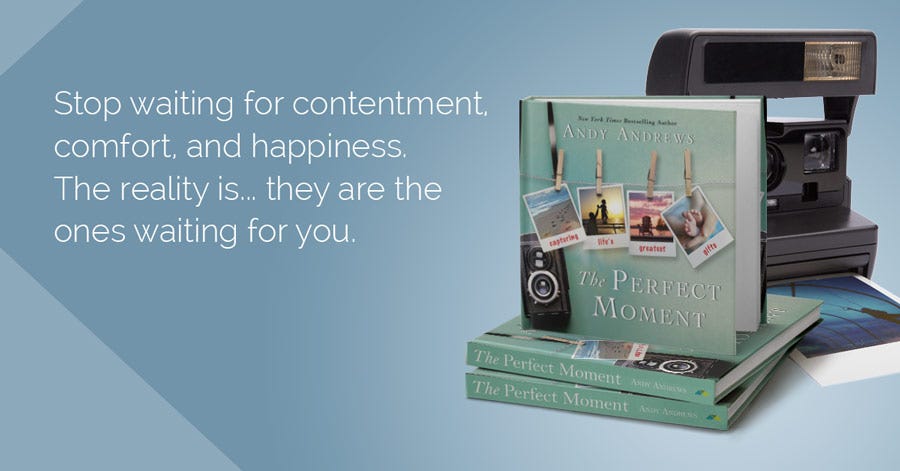
Creating Your Perfect Moments

June 21, 2017

Once you start noticing your life's perfect moments, there is only one thing you are going to want to do—create them intentionally.

15094 view(s)

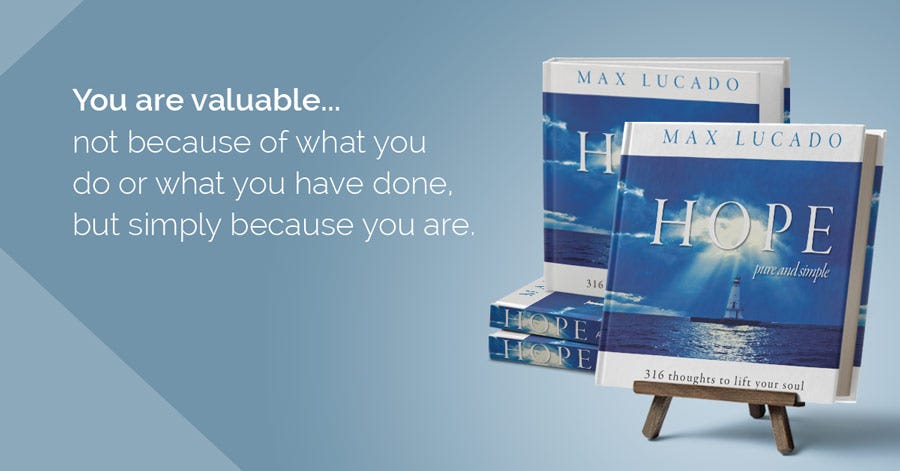
12 Thoughts to Lift Your Soul

June 8, 2017

If we look in the right places, we can find an abundance of hope wherever we go! Here are 12 thoughts to lift your soul.

7564 view(s)

Who Packed your Parachute?

April 29, 2011

Charles Plumb was a U.S. Navy jet pilot in Vietnam. After 75 combat missions, his plane was destroyed by a surface-to-air missile. Plumb ejected and parachuted into enemy hands. He was captured and spent six years in a communist Vietnamese prison. He survived the ordeal and now lectures on lessons learned from that experience!

One day, when Plumb and his wife were sitting in a restaurant, a man at another table came up and said, "You're Plumb! You flew jet fighters in Vietnam from the aircraft carrier Kitty Hawk. You were shot down!"

"How in the world did you know that?" asked Plumb.

"I packed your parachute," the man replied. Plumb gasped in surprise and gratitude. The man pumped his hand and said, "I guess it worked!" Plumb assured him, "It sure did. If your chute hadn't worked, I wouldn't be here today."

Plumb couldn't sleep that night, thinking about that man. Plumb says, "I kept wondering what he had looked like in a Navy uniform: a white hat; a bib in the back; and bell-bottom trousers. I wonder how many times I might have seen him and not even said, 'Good morning, how are you?' or anything because you see, I was a fighter pilot and he was just a sailor." Plumb thought of the many hours the sailor had spent at a long wooden table in the bowels of the ship, carefully weaving the shrouds and folding the silks of each chute, holding in his hands each time the fate of someone he didn't know.

Now, Plumb asks his audience, "Who's packing your parachute?" Everyone has someone who provides what they need to make it through the day. He also points out that he needed many kinds of parachutes when his plan was shot down over enemy territory - he needed his physical parachute, his mental parachute, his emotional parachute, and his spiritual parachute. He called on all these supports before reaching safety.

Sometimes in the daily challenges that life gives us, we miss what is really important. We may fail to say hello, please, or thank you, congratulate someone on something wonderful that has happened to them, give a compliment, or just do something nice for no reason. As you go through this week, this month, this year, don't forget to recognize the people who pack your parachutes.

-------

This story came from Mac Anderson's The Power of Kindness. Who packed your parachute?

3275 view(s)

International Women's Day

March 8, 2011

Today is International Women's Day, and I would like to share a special blog post from BJ Gallagher. BJ specializes in encouraging for women, and if you've read Oil For Your Lamp; Oh Thank Goodness, It's Not Just Me! or The Best Way Out is Always Through, then you seen BJ's passion for inspiration.

Here's an interview that BJ wrote for the Huffington Post. If you'd like to see the original, check it out here: http://www.huffingtonpost.com/bj-gallagher/interna...

March 8 is the 100th anniversary of International Women's Day, which seems like the perfect occasion to get the scoop on the "State of America's Working Women." So I contacted Dr. Ken Nowack, who knows a thing or two about women. As an organizational and health psychologist, he has been studying the emotional and physical well-being of working women for over two decades.

BJG: Tell me about your research on working women. Do you study a wide variety of women's issues or mostly health issues?

Nowack: As a researcher, I have been asking one basic question for over 20 years: "Who are the most hardy and resilient in the face of work and life stress?" My colleagues and I have explored the answer to this question for working women and men in many different industries. We use a validated set of scales measuring stress, hardiness, coping, lifestyle practices, Type A behavior, social support and happiness.

BJG: Some people may not know what Type A means. How do you define it in your research?

Nowack: The concept of "Type A behavior" has been around since the 1950s when two cardiologists, Meyer Friedman and Ray Rosenman, first noticed that patients who were wearing out their waiting room furniture seemed to express a behavioral pattern of being impatient, hard driving, competitive and quick to anger.

Type A behavior is measured using a standardized 10-item scale derived from research on the classic Framingham Heart disease studies. In my own research, higher scores on our measure indicate both a need to achieve as much as possible (hard driving) and irritability when things move too slowly, or if they work with incompetents or jerks (impatience).

Our current research suggests that these two different Type A concepts of hard driving and impatience predict different outcomes -- but only those who are prone to be hostile, quick to anger and frustrated when things don't go their way are at risk for cardiovascular problems. So, some aspects of personality such as hostility, impatience, high neuroticism and high social anxiety (Type D personality) are still risk factors for cardiovascular illness -- even after controlling for smoking, diabetes, cholesterol and high blood pressure. This is particularly important for women because heart disease is their number one killer.

BJG: I've heard you talk about "Hardy Type A" women. Are these women who actually thrive on stress?

Nowack: Let me share with you some current findings that we haven't yet published about Type A women (as well as men). We did an analysis of 345 working men and 510 women in diverse industries and job levels exploring the relationship between work-life stress, Type A behavior (driven, impatient and achievement oriented style) and cognitive hardiness (optimistic disposition; viewing change as a challenge; having an internal locus of control; high self-efficacy and self-esteem; committed to work and life activities) from our data base. We found three interesting outcomes:

1. Women reported significantly higher levels of overall work and life stress compared to their male counterparts.

2. Type A women (and men) who were also high on hardiness reported significantly less work and life stress overall. Hardiness seems to be an important buffer of experiencing stress and coping with it (mobilizing your social resources; employing more healthy lifestyle and coping skills). I wouldn't say that Hardy Type A women thrive on stress, but they let more things roll off their backs and react in more positive ways to life's challenges.

3. The highest level of stress was reported by Type A women who also reported low hardiness. Women who are highly competitive, driven and impatient are most likely to experience a high level of stress when they are more pessimistic, and view change as a threat rather than a challenge. These findings suggest that hardy Type A women can, indeed, "have it all" and remain healthy -- both physically and psychologically.

BJG: Okay, I like the sound of that! So now tell me, based on your research on working women, what advice would you give us?


Nowack: Women are naturally primed to be more emotionally expressive and nurturing under stress due to the release of the pro-social hormone oxytocin, so reaching out to network and avoid isolation comes pretty naturally to most working women. While men experience a "fight or flight" response to stress, women go into "tend and befriend" mode. Women should definitely keep doing that.

And if I had to pick three top resilient factors, they would be increasing physical activity; improving sleep quantity and quality; and feeling and expressing emotions with closure (e.g. through giving forgiveness, keeping a journal, gratitude giving). Our profile of a Hardy Woman:
  • Possesses and cultivates a strong social support network
  • Gets adequate sleep (increasing research is showing a link between stress, sleep and health)
  • Exercises at least three to five times a week for 60 minutes or more
  • Eats heart-healthy foods
  • Feels her emotions and puts closure to them
  • Minimizes any self-critical or self-blaming internal dialogue
The trick, of course, is to put these into practice on a daily basis!

BJG: Isn't that the truth? We know what's good for us, but we often don't do it. But that's another blog for another day. For today, let me ask you one final question: Do you have any sense of how the recession has affected women? Are men and woman both affected similarly, or are there significant differences?


Nowack: The recession has been an equal opportunity stressor for both men and women, although financial strains for women seem to have increased relative to their male counterparts. The American Psychological Association's "Stress in America" survey last year revealed that women reported less work stress but more financial stress than their male counterparts -- 73 percent of men reported money as a significant stressor, compared with 79 percent of women. Women also reported an increase in overall stress compared to men over the last five years (49 percent of women versus 39 percent of men).

Data produced by the Gallup and others have consistently shown strong parallels between psychological well-being and the ups and downs of the economy. These studies show that the lowest "happiness" ratings for both men and women occurred in 1973, 1982, 1992 and 2001 -- each year at the center of a major recession. Not surprising.

On the plus side, women seem to have more experience handling and balancing different social roles (partner, parent, bread winner), so they tend to have more flexibility about their work identities compared to men -- particularly those who are in the Baby Boomer or older generation.

BJG: Thank you for your time and all this great information, Dr. Nowack. I'm sure that working women everywhere -- and the men who care about them -- will benefit from your insights.

For more information, check out Dr. Ken Nowack's blog and follow him on Twitter: www.twitter.com/envisia for regular research updates.
2633 view(s)

What will my reward be?

December 7, 2010

Here's a story entitled, "What will my reward be?" I came across this as Author Unknown, so if you happen to know who wrote this story, please share it as a comment! Enjoy this story:

One day a fisherman was lying on a beautiful beach, with his fishing pole propped up in the sand and his solitary line cast out into the sparkling blue surf. He was enjoying the warmth of the afternoon sun and the prospect of catching a fish.

About that time, a businessman came walking down the beach, trying to relieve some of the stress of his workday. He noticed the fisherman sitting on the beach and decided to find out why this fisherman was fishing instead of working harder to make a living for himself and his family. "You aren't going to catch many fish that way," said the businessman to the fisherman. "You should be working rather than lying on the beach!"

The fisherman looked up at the businessman, smiled and replied, "And what will my reward be?" "Well, you can get bigger nets and catch more fish!" was the businessman's answer. "And then what will my reward be?" asked the fisherman, still smiling. The businessman replied, "You will make money and you'll be able to buy a boat, which will then result in larger catches of fish!" "And then what will my reward be?" asked the fisherman again. The businessman was beginning to get a little irritated with the fisherman's questions. "You can buy a bigger boat, and hire some people to work for you!" he said.

"And then what will my reward be?" repeated the fisherman. The businessman was getting angry. "Don't you understand? You can build up a fleet of fishing boats, sail all over the world, and let all your employees catch fish for you!" Once again the fisherman asked, "And then what will my reward be?" The businessman was red with rage and shouted at the fisherman, "Don't you understand that you can become so rich that you will never have to work for your living again! You can spend all the rest of your days sitting on this beach, looking at the sunset. You won't have a care in the world!"

The fisherman, still smiling, looked up and said, "And what do you think I'm doing right now?"

What is your ambition in life? What's the difference between laziness and contentment? What do you feel content about?

3265 view(s)
All content and design copyright © Simple Truths 2026. All Rights Reserved.